
Digital Twin for Automotive Decision-Making
A live, explainable Digital Twin that mirrors how automotive enterprises actually operate across engineering, manufacturing, supply chain, quality, and aftersales.
- One Digital Twin across PLM, MES, ERP, quality, and supplier systems
- Unified view of vehicles, variants, components, plants, and lifecycle
- Explainable decisions for complex, safety-critical environments
- Built for large, global automotive organizations
Automotive scenarios only · No generic demos · Enterprise-grade walkthrough
Why Automotive Digital Twins Fail in Practice
Most automotive Digital Twins focus on isolated assets, simulations, or factory views. They break down the moment decisions span engineering, production, quality, and the field.
Here’s what that means in practice.
- Engineering, production, and quality operate on disconnected models
- PLM, MES, ERP, and supplier systems describe the same concepts differently
- Root-cause analysis requires manual reconciliation across teams
- Decision speed decreases as complexity increases
Decisions don’t fail because data is missing. They fail because meaning is fragmented.

Not just a simulation engine or analytics layer.
d.AP is a Digital Twin of automotive enterprise knowledge. It represents vehicles, variants, components, plants, suppliers, and lifecycle logic and is continuously synchronized with operational reality.
dAP provides a decision infrastructure for automotive complexity.
Generic Automotive Digital Twin
- Asset- or factory-focused
- Simulation-centric
- Disconnected from enterprise decisions
d.AP Automative Digital Twin
- Enterprise knowledge-centric
- Lifecycle-aware
- Explainable by design

Step 1: Federated System Connectivity
PLM, MES, ERP, quality, and supplier systems remain in place and are connected through meaning.

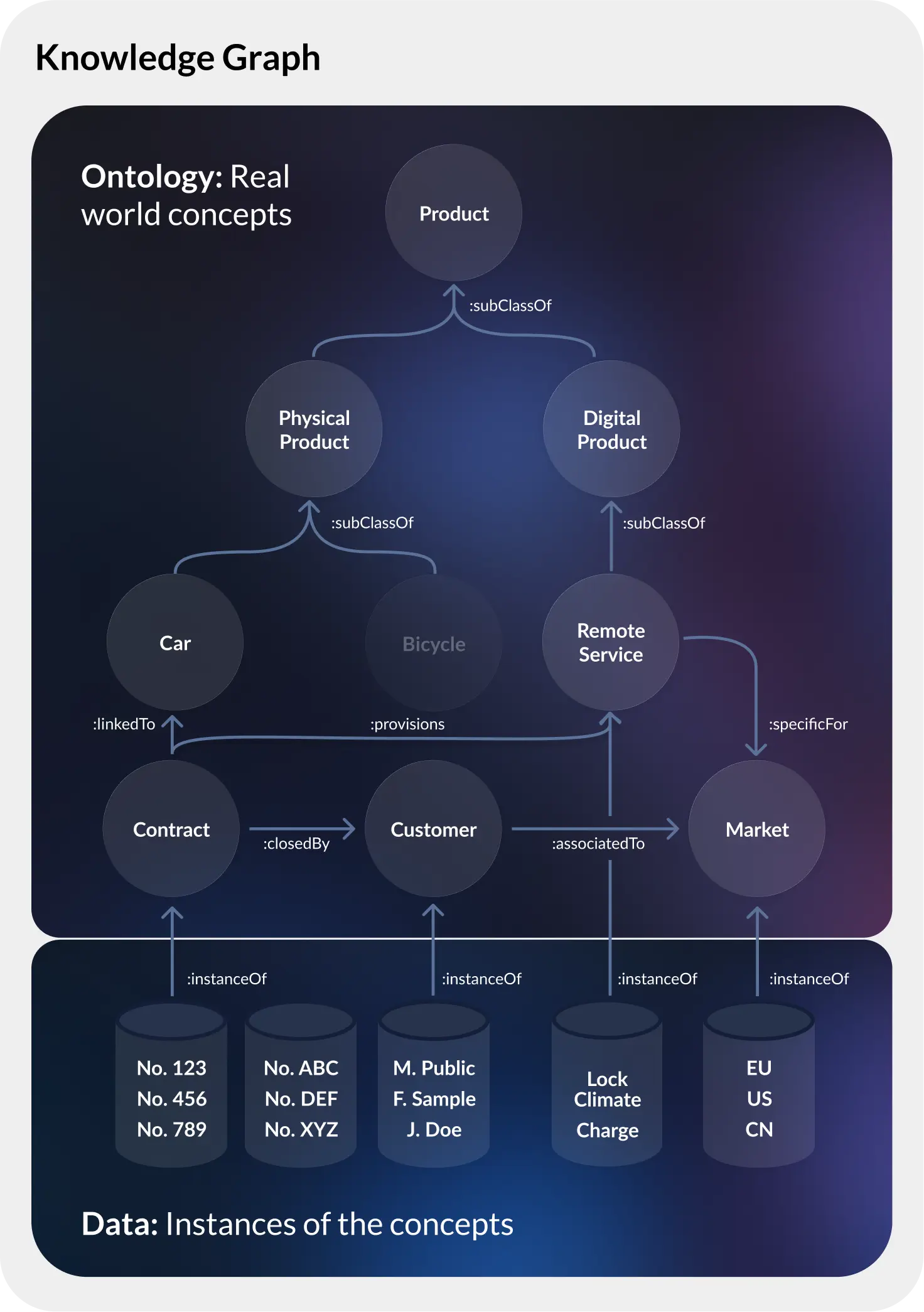
Step 2: Enterprise Ontology
Core automotive concepts (vehicle, variant, part, plant, supplier, defect) are defined once and shared across teams.

Step 3: Cross-Lifecycle Reasoning
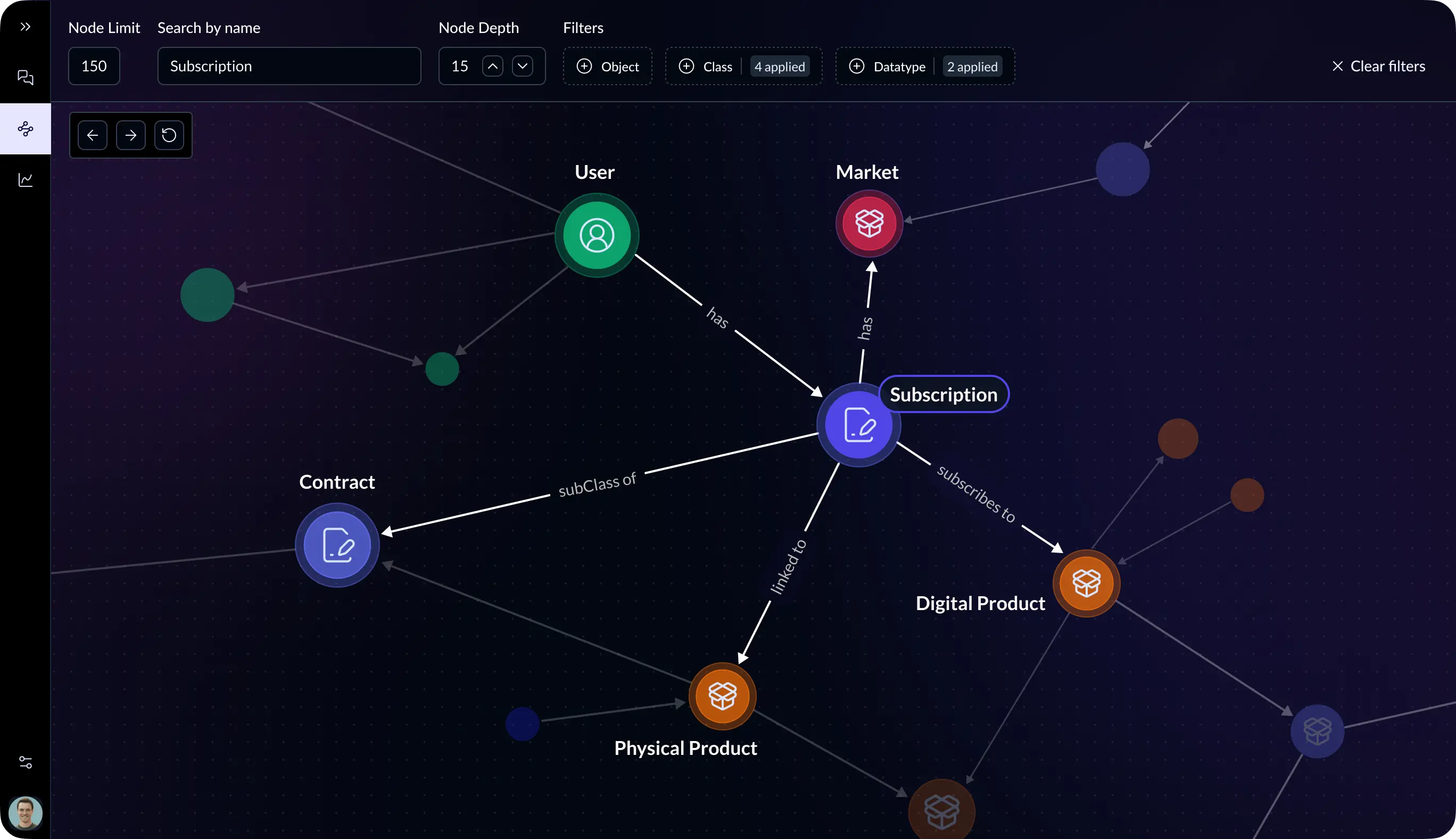
Decisions span design, production, quality, and aftersales with full traceability.

Step 4: Decision Consumption
Engineers, plant managers, quality leaders, and executives interact with the same Digital Twin via natural language or dashboards.
Real Enterprise Impact for Automotive Teams.
Faster Decisions Without Guesswork
Instant answers across engineering, production, and quality without manual reconciliation.
Fewer Wrong Decisions
Decisions grounded in unified, lifecycle-aware automotive knowledge.
A Shared Enterprise Truth
Engineering, manufacturing, and operations reference the same semantic foundation.


Automotive Questions d.AP Can Help Answer ~ Reliably
Which design changes correlate with downstream quality issues?
Which plants are most at risk of missing output targets and why?
What are the root causes behind recurring defects across models?
How do supplier issues propagate across vehicles and regions?
Explainable Decisions for Automotive Environments
- Data sources are visible
- Logic and assumptions are inspectable
- Decisions are auditable and defensible
Built for environments where decisions carry operational and reputational impact.

Designed for Automotive Scale and Constraints
- EU-hosted SaaS (VPC)
- Customer-managed cloud (PaaS)
- Pilot-first engagement model
Who is our Automotive Digital Twin built for?
Automotive OEMs and Tier-1 suppliers
Multi-plant, multi-region operations
Established Data / AI teams
High-impact, cross-functional decisions
Frequently Asked Questions
We answer your questions in advance. We've missed something? Let us know.
How is d.AP different from factory or production Digital Twins?
.svg)
Factory Digital Twins typically model a single plant, line, or asset and focus on simulation or visualization. d.AP creates a Digital Twin of automotive enterprise knowledge, connecting engineering, manufacturing, quality, supply chain, and aftersales so decisions can be made across the full vehicle lifecycle.
Can d.AP connect PLM, MES, ERP, quality, and supplier systems together?
Yes. d.AP is designed specifically for multi-system automotive environments. It connects PLM, MES, ERP, quality, and supplier systems through a shared semantic model, without forcing migrations or replacing existing platforms.
Will this require major changes to our current automotive IT landscape?
No. d.AP follows a federated integration approach. Your existing systems remain in place, and d.AP sits above them as a knowledge layer, reducing integration risk and avoiding large-scale re-architecture projects.
Is d.AP suitable for safety-critical and high-risk automotive decisions?
Yes. Every decision produced by d.AP is explainable and traceable. Users can inspect contributing systems, logic, and assumptions. This makes dAP suitable for environments where decisions must be trusted, reviewed, and defended.
How does d.AP help with root-cause analysis in automotive?
d.AP enables cross-lifecycle reasoning. Quality issues in the field can be traced back through production, supplier data, and engineering decisions without manual reconciliation across teams or systems.
Can engineering, manufacturing, and quality teams use the same Digital Twin?
Yes. d.AP provides one shared semantic model of automotive reality, while allowing each team to interact with it from its own perspective. This eliminates conflicting definitions and misaligned KPIs across departments.
Can non-technical automotive users work with d.AP?
Yes. Business users interact with d.AP through natural language using Aluna (our AI agent). No SQL, SPARQL, or data engineering skills are required, reducing dependency on central data teams.