
Insights that connect the dots.
Your go-to stop for insights on data, AI, and knowledge graphs and how they’re transforming the modern enterprise. Dive into stories, sparks, and strategies shaping a smarter, more connected future.
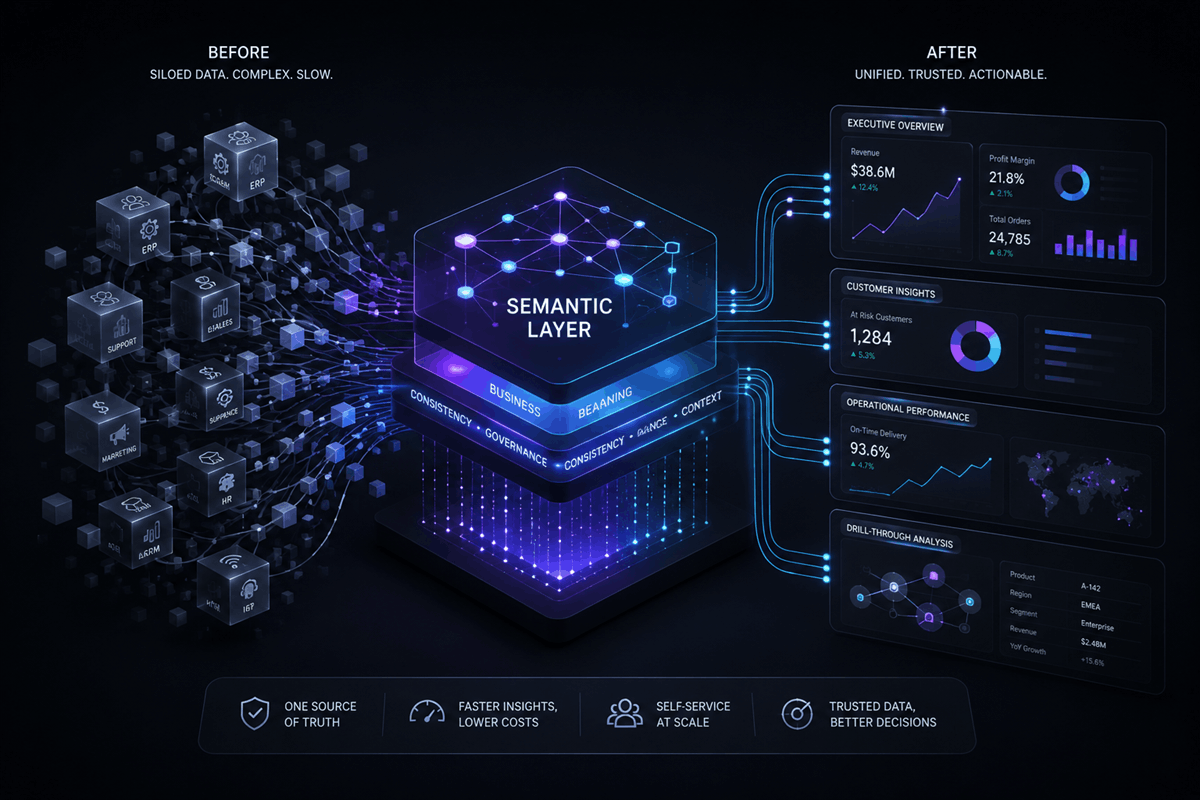
While a classic BI semantic layer helps dashboards agree, modern enterprise requirements demand a richer semantic model that captures actual business objects, relationships, rules, and context.


A data fabric improves data movement. A semantic layer improves data interpretation. You need both if you want consistent business intelligence, trusted self-service analytics, and AI systems that can reason over enterprise data safely.
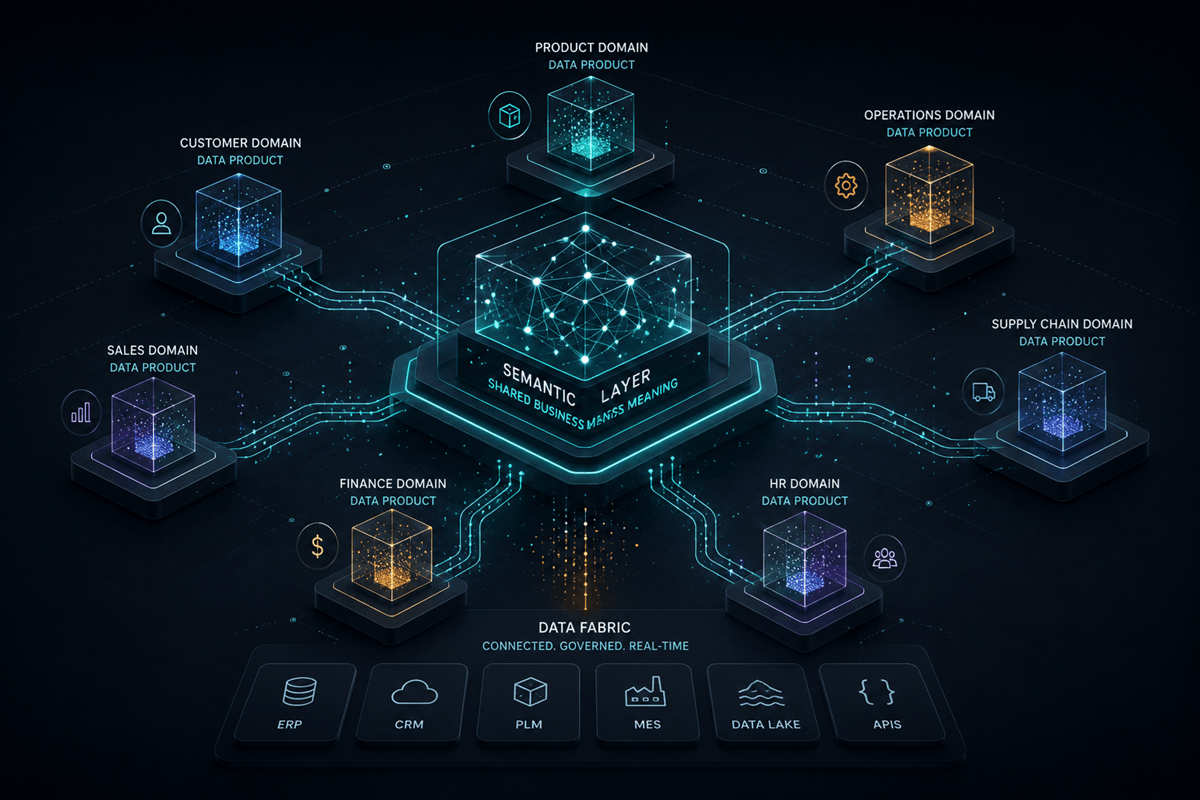
We explain where enterprise data mesh architectures stall, what a semantic layer adds to a distributed design, how it maps to the four core principles of a mesh, and how to move from a pilot into a reusable enterprise reality.
This guide explains why the semantic layer has moved beyond dashboard consistency, how AI agents change the role it plays, and how it turns enterprise data management into a foundation for trusted decisions.

This guide explains why enterprise AI hallucinations occur, why model-level fixes hit a logical ceiling, where document retrieval falls short, and what grounded enterprise AI looks like when it's built on an ontology-backed knowledge layer.

If you're evaluating AI agent strategies, the question isn't whether to use an LLM or a knowledge graph, it's how to combine them so your agents can think creatively and act correctly.

A data lake knowledge graph adds the missing meaning layer, cutting repeated joins and grounding AI on governed context, without moving your data.

The past decade of data strategy successfully solved the physical challenge of storing raw data at scale. The next decade will be defined by the requirement to govern its business meaning.

A semantic layer turns your data warehouse's raw tables into governed business meaning consistent metrics and trusted answers for every BI tool and AI agent.
.png)
Knowledge graphs are increasingly seen as part of modern data architecture. We’ll look at use cases through three practical lenses, being: industry, department, and role.

Fine-tuning can improve model’s performance on domain-specific tasks, but it stores business knowledge in model weights that are difficult to audit, difficult to reliably update, and costly to maintain over time.

The most effective AI applications will not be defined by model power alone. They will be built on a deliberate stack: LLM for making decisions, Harness for orchestration, Grounding Layer for context, and Use Case for value.
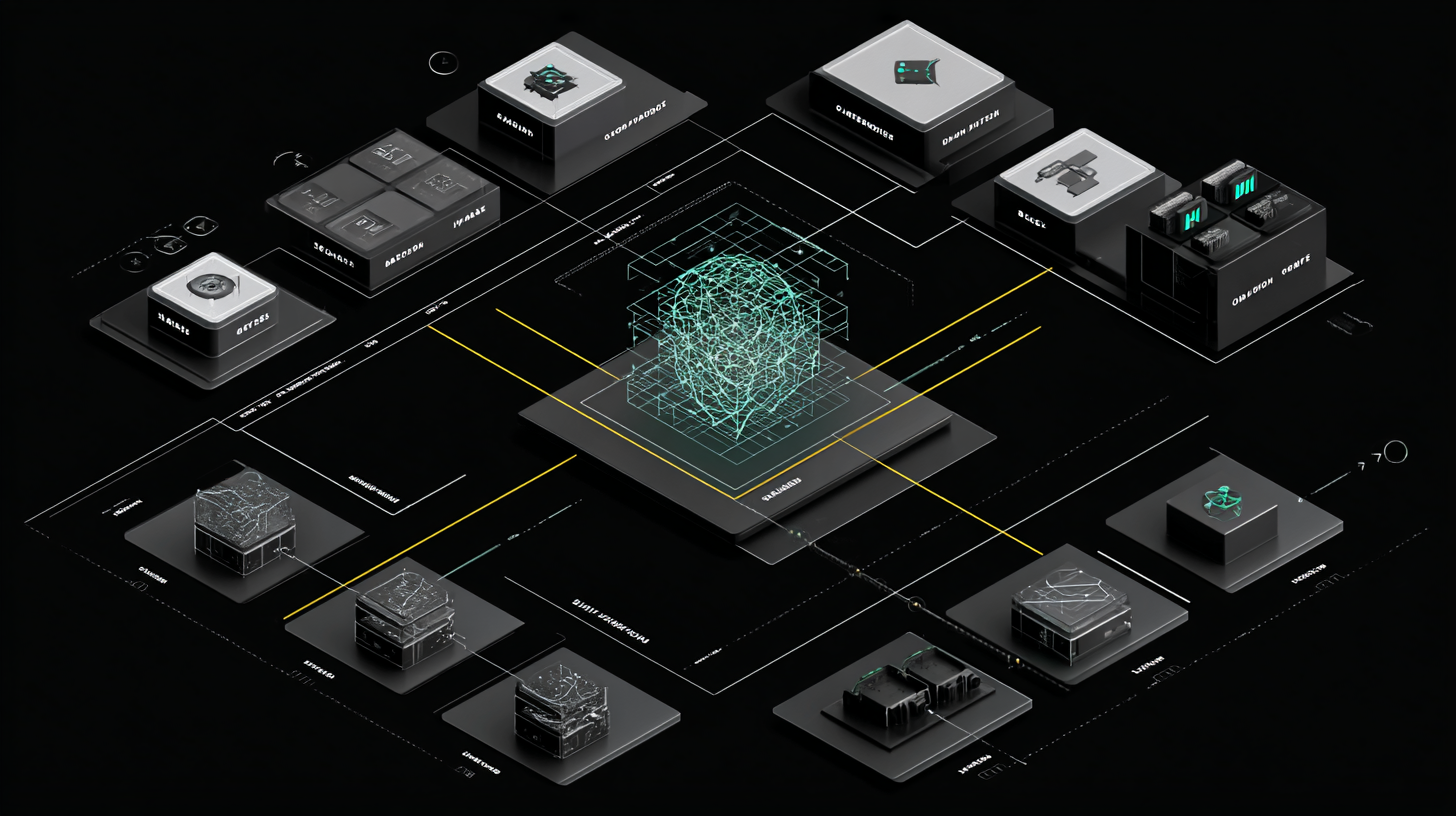
We give you five principles that decide whether the layer survives production, four phases of building it, and the architectural decisions sitting inside each phase.
In this guide, we walk you through what a context layer is, what sits inside it, how it differs from neighbouring concepts you already work with, what it looks like in production, and how it gets built.

Transformer architecture remains the foundation of modern AI agents because it is flexible, scalable, and mature across many tasks. Large language models, vision-language models, audio-language systems, vision-language-action models, and world models all show how far the Transformer pattern has spread.

A 95% accurate AI can still be wrong 65% of the time in the real world. Here's why your enterprise AI is failing and what to do about it.

We explore why enterprise AI breaks down without a knowledge foundation, and what changes when your models are finally given something real to reason over.

This article explains what an enterprise semantic layer is, why it matters at scale, what enterprise-grade looks like, and why it now belongs on the architecture roadmap rather than the BI backlog.

We look at what happens when semantic layers and Gen AI are combined effectively in production environments, and what enterprises gain without a semantic layer remaining the hidden constraint.
We explore the root of the enterprise reporting problem, how these two layers work together to solve it, the operational outcomes, and how this architecture works in practice.

Business
The Abstraction Has Shifted: Why Developer Productivity Is Now a Function of Conceptual Clarity
The core work of software development has irrevocably shifted from the mechanics of implementation to the clarity of intent. The most valuable engineering skill is no longer the ability to write code, but the ability to think with architectural precision and communicate that vision in a way a machine can execute.
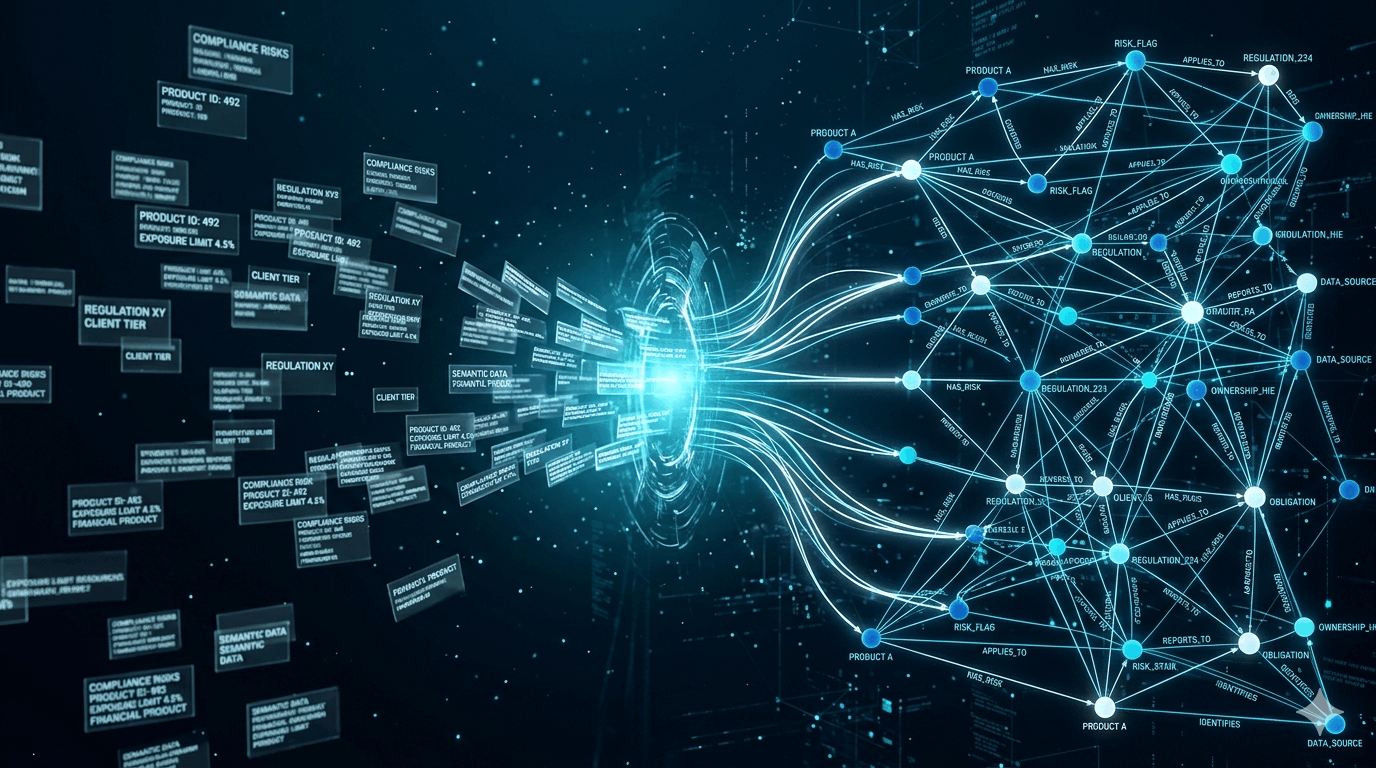
Standard RAG returns inconsistent, ungrounded answers at enterprise scale. See how knowledge graphs add the structure, accuracy, and explainability it lacks.
We explain the distinction between ontologies and knowledge graphs, show the impact each can have, and explore why they work best together.

Generative AI will let anyone build apps, but this freedom can create chaos. The solution isn't restriction, it's a semantic framework. A Knowledge Graph of business capabilities ensures that decentralized innovation leads to coherence, not compounding technical debt.

Platforms like OpenClaw solve the visibility problem: they make it possible to ask questions of your data through a conversational interface. The harder problem ensuring those answers are accurate, consistent, explainable, and secure requires an investment in knowledge architecture that no agent runtime provides on its own.

Unlike modern software, LLMs have no separation between data and instructions; every token becomes part of the model’s execution path. This is why adversarial prompts reliably bypass safeguards across models. Safety layers help, but cannot eliminate the underlying architectural weakness.

We compare the top agentic analytics platforms for 2026, including d.AP, Databricks, and Palantir. Learn how to choose the right solution for explainable, enterprise-grade AI analytics.
An ontology is a prescriptive architecture of meaning, while most other semantic models are descriptive snapshots of data. By grounding your systems in a formal ontology, you turn fragmented data into structured knowledge, enabling reasoning, interoperability and governance at a scale that emergent models can never achieve.

Schema-RAG agents don't just search, they reason. Here are the five architectural decisions that determine whether your AI becomes a reliable, enterprise-grade reasoning engine or remains a fragile prototype.

A shared Iceberg format doesn’t make zero‑copy possible across platforms. This article explains why physics breaks the illusion and how a knowledge layer provides the real path forward.

Labeled Property Graphs (LPGs) give your data structure, but they don't give it meaning. For enterprise AI to deliver reliable insights, you need the formal logic and interoperability of standards-based ontologies. Here’s why that distinction is critical.

This guide covers enterprise digital twin platforms used for operational intelligence, simulation, prediction, and optimisation. We'll compare buyer trade-offs such as fidelity versus scalability, time-to-value, integration effort, and organisational readiness.

This guide covers enterprise-grade unified data fabric platforms. It outlines buyer-relevant trade-offs such as federation versus centralization, semantics, governance, and time-to-value.
We compare the 5 best enterprise knowledge graph platforms in 2026. Evaluate d.AP, Stardog, Neo4j, Foundry, eccenca & GraphAware using a practical buyer framework

LLMs can talk, but they don't understand your business. Ontologies provide the missing layer of meaning, turning generative AI from a promising demo into a correct, scalable, and trustworthy enterprise tool. Here’s why semantics are having a renaissance.

In this guide, we outline what makes Foundry distinctive, why enterprises evaluate alternatives, and how leading platforms compare across architecture, semantic capabilities, compliance constraints, and time-to-value.

Knowledge Graphs provide the semantic context, constraints and explicit relationships that LLMs lack. This enables true reasoning, like navigating a map of your business, instead of just text retrieval.

"Context Graphs" promise to capture informal business decisions from Slack and email for AI. But this isn't a technology gap, it's a discipline gap. Instead of chasing buzzwords, enterprises should build robust Enterprise Knowledge Graphs that formally capture critical business events. In the age of AI, clarity is the new agility.

In this article, you’ll discover why Agentic-AI systems demand more than data; they require explicit structure and meaning. Learn how formal ontologies bring coherence, reasoning and reliability to enterprise AI by turning fragmented data into governed, machine-understandable knowledge.

In this article you'll explore how Knowledge Graphs bring coherence to complexity, creating a shared semantic layer that enables true data-driven integration and scalable growth.
If you’re building AI systems, you’ll want to read this before assuming MCP is your integration answer. The article breaks down why the Model Context Protocol is brilliant for quick demos but dangerously fragile for enterprise-scale architectures.
Despite heavy investments, enterprises remain stuck - learn how Knowledge Graphs and AI-powered ontologies finally unlock fast, trusted and scalable data access.

Discover how Knowledge Graphs connect scattered data into one smart network - making it easier to use AI, speed up automation, and build a future-ready data strategy.
GenAI alone isn’t enough. Learn how Knowledge Graphs give AI real meaning, transforming it into a trustworthy, explainable assistant grounded in enterprise reality.

Ontologies give data meaning and consistency. Without them, integration breaks, analytics misfire and AI delivers unreliable results.
.png)
This article reframes the debate, showing why the true differentiator for enterprise data strategies isn’t eliminating copies, but governing them through semantics and knowledge graphs to make data trustworthy, reusable and AI-ready.