
Enterprises no longer struggle to monitor assets. They struggle to understand how complex systems behave across time, states, and interventions. This shows up as downtime, inefficiency, and slow responses when conditions change.
Dashboards explain what happened. Digital twins are increasingly expected to explain why it happened, what happens next, and what happens if you intervene. That shift moves twins from isolated models to decision systems that sit closer to operations.
Most enterprises run more than one twin type. Engineering teams need fidelity. Operations teams need real-time state. Leadership needs system-level decisions across dependencies. The hard part is connecting these models to shared decisions, not forcing everything into one twin.
This guide covers enterprise digital twin platforms used for operational intelligence, simulation, prediction, and optimisation. We'll compare buyer trade-offs such as fidelity versus scalability, time-to-value, integration effort, and organisational readiness.
TL;DR: the Best Enterprise Digital Twin Platforms are:
- d.AP by digetiers (d.AP): Best for decision-centric digital twins that model enterprise systems, processes, and outcomes using semantics, knowledge graphs, and explainable AI.
- Siemens Xcelerator: Best for industrial-scale physical and production digital twins spanning design, manufacturing, and operations.
- Dassault Systèmes (3DEXPERIENCE): Best for high-fidelity engineering and lifecycle digital twins rooted in CAD, PLM, and simulation.
- Ansys: Best for physics-based and simulation-driven digital twins in safety-critical environments.
- PTC ThingWorx: Best for IoT-driven asset and operational digital twins focused on real time monitoring and predictive maintenance.
- Palantir Foundry: Best for enterprise-scale system and operational digital twins that connect data, processes, and decisions.
The Enterprise Reality That Forces Digital Twin Adoption
Digital twins become strategic when operations need more than visibility. They become necessary when teams need to predict outcomes, test interventions, and explain decisions across complex systems.
The 5 Recurring Problems Digital Twins Solve
- Fragmented operational data leads to no system-level understanding. Teams see local signals but miss how dependencies propagate across enterprise systems and supply chains. This isolation prevents leaders from seeing the full impact of a disruption until it is too late.
- Reactive operations mean issues get discovered after impact. The organization learns in production. Mistakes cost more and recovery takes longer when you rely on lagging indicators rather than predictive analytics.
- Static KPIs hide dynamic behavior. The numbers look stable until conditions shift. Then the organization lacks a model that explains the change. Static reports cannot capture the complex, non-linear relationships that drive performance.
- High-risk changes lack a safe environment for testing interventions. Leaders either delay improvements or push change without understanding second-order effects. They lack a virtual environment to safely simulate the outcome of a decision before committing capital.
- Human limits get exposed as complexity grows. Complex patterns outpace intuition. This is especially true when conditions shift across production lines, transportation networks, and multi-site operations.
What’s Changed?
Digital twins evolved from visualization into decision systems. Predictive and prescriptive use cases are now viable where sensor data quality and integration discipline exist. AI complements simulation by improving detection, forecasting, and recommendation quality. The twin keeps assumptions and constraints visible. Enterprises also demand closed-loop optimization, pushing twins toward integration with workflows, not just analytics outputs.
What Counts as a “Digital Twin Platform”
“Digital twin” covers multiple platform categories that solve different problems. Use the archetypes below to separate engineering fidelity, asset monitoring, and decision centric system twins, so you compare like with like.
The Three Platform Archetypes Buyers Confuse
A) Engineering and simulation tools: These platforms focus on high-fidelity models of physical prototypes. They excel in design, validation, and safety-critical simulation capabilities. The trade-off is limited enterprise integration and scalability across many assets and processes. They are often disconnected from live operations. Example: Ansys, Dassault Systèmes.
B) IoT and asset monitoring platforms: These platforms connect to real time data for monitoring physical assets and fleets. They help with visibility and predictive maintenance. The trade-off is limited “what-if” depth at the system level unless paired with modeling and decision layers. Example: PTC ThingWorx.
C) Full digital twin platforms: These platforms combine data management, models, simulation, and decision workflows. They support cross-system understanding and operational decision making. The trade-off is higher architectural and organizational commitment, since the platform becomes part of how teams run operations. Example: d.AP, Palantir Foundry.
Minimum Enterprise-Grade Capabilities Checklist
This checklist defines the baseline capabilities that separate an enterprise digital twin platform from a dashboard, a point simulation tool, or a pilot. Use it to screen vendors early. If a platform falls short on any of these, expect slower time-to-value or higher integration effort to close the gap.
- Real-time ingestion: Handles streaming data across OT and IT sources.
- State synchronization: Maintains fidelity between physical and digital representations.
- Flexible modeling: Supports physics-based, data-driven, or hybrid approaches.
- Scenario simulation: Aligns what-if analysis to real business decisions.
- Explainability: Provides clear reasons for predictions and recommendations.
- Integration: Connects seamlessly with analytics and operational systems.
- Security: Enforces access control across OT and IT boundaries.
- Reliability: Matches operational performance expectations.
Buyer Evaluation Framework
Once you know which twin category you need, evaluation should stay anchored in outcomes and operating constraints. This framework helps you score platforms on decision scope, fidelity trade-offs, integration effort, and organisational readiness.
Primary Outcome You’re Buying
Start with the decision outcome, not the vendor category.
- Asset performance optimization: Reduce downtime and stabilize throughput.
- Predictive maintenance: Forecast failure risk and plan interventions.
- Operational resilience: Understand dependencies and failure modes.
- Process optimization: Identify bottlenecks and improve flow across the shop floor.
- Sustainability: Improve carbon footprints and energy use with accountable assumptions.
- Strategic scenario planning: Simulate scenarios across sites and networks.
Twin Scope and Fidelity
Define scope first, then choose fidelity. Asset-level twins suit equipment and fleets. System-level twins suit production lines and sites. Enterprise-level twins suit cross-system decision making. Be explicit about accuracy versus scalability. High fidelity improves precision for narrow decisions. System-level coverage improves decision scope across complex systems.
Modeling Approach
Pick the modeling approach that matches the decision.
- Physics-based: High fidelity where physical laws dominate.
- Data-driven: Machine learning models where behavior is learned from history.
- Hybrid: Physics plus AI where both constraints and patterns matter.
Explainability and Trust
Treat trust as a requirement. Are assumptions and constraints visible to decision makers? Do outputs trace back to data and models? Does the twin show what changed when conditions shift?
Operationalization
Clarify how the twin fits day-to-day operations. Do you need dashboards or simulation workbenches? Do you need APIs into operational systems? Are you ready for closed-loop automation in controlled steps?
Security, Deployment and OT/IT Boundaries
Operational twins touch sensitive systems. Buyers should align hosting, sovereignty, and isolation requirements early. Security fit often blocks adoption later than any technical limitation.
Time-to-Value and Organizational Effort
Digital twins require ownership. Tie pilot timelines to one decision and one operational workflow. Assess skill requirements for modeling, integration, and validation. Define the long-term ownership model for calibration and change control.
Our Shortlist: The Best Digital Twin Platforms in 2026
Each platform below represents a different twin philosophy. The goal is not to crown a universal winner. It is to identify the best fit for your decisions, your maturity, and the type of twin you are building.
1. d.AP by digetiers (d.AP)
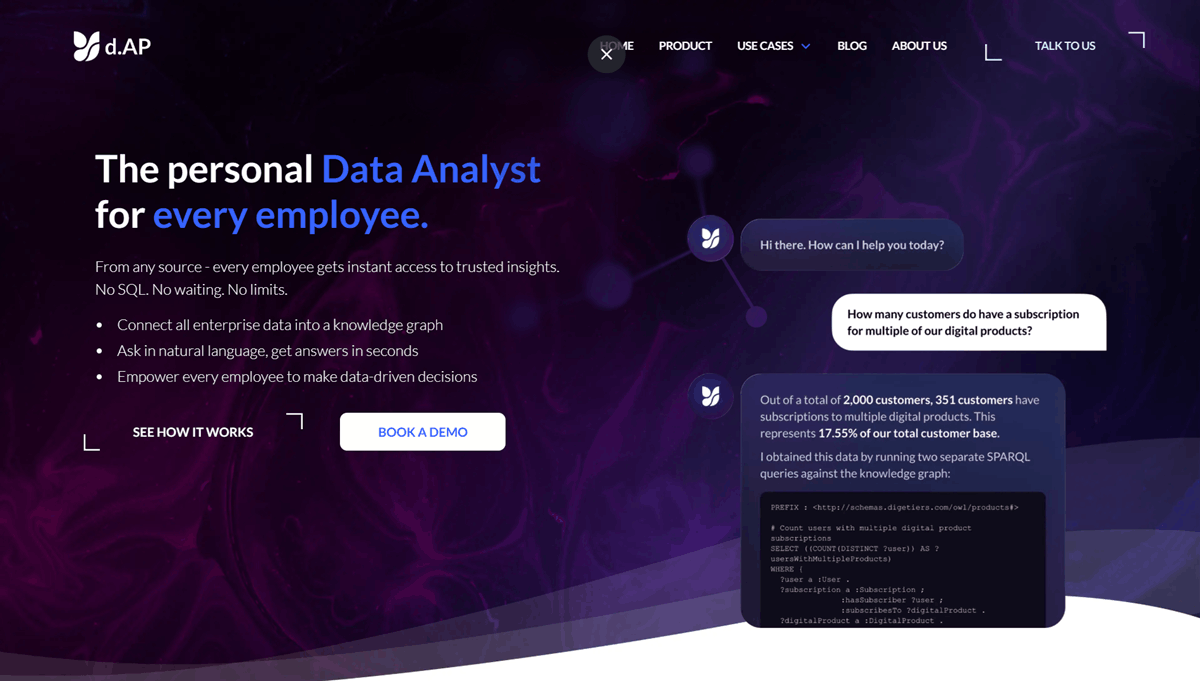
d.AP is a decision-centric digital twin platform designed for enterprise systems and processes. It moves beyond asset visualization to model the digital thread that connects operations, finance, and supply chain. Unlike physics engines that simulate stress on a component, d.AP uses semantic knowledge graphs and explainable AI to model system behavior, dependencies, and policy impacts. It functions as a reasoning layer that ingests data from ERPs, IoT streams, and other twins to provide informed decisions about trade-offs and interventions. It complements physical counterparts by adding the business context they often lack.
Industries best fit: Regulated and complex operational environments, including Manufacturing, Energy & Utilities, Aerospace & Defense, Life Sciences, and Public Sector infrastructure.
Best-fit scenarios:
- System and process twins across enterprise systems.
- Decision-impact modeling for interventions and trade-offs.
- Operational resilience and dependency modeling.
- AI-grounded twins where explainability matters.
Watch-outs: d.AP is not a physics-based simulation platform. Do not use it to model airflow over a wing. Use it to model the decision impact of that wing failing across the supply chain.
What to test:
- Cross-system "what-if" decision scenarios tied to real workflows.
- End-to-end explainability from data to recommendation.
- Coexistence with physical and engineering twins.
2. Siemens Xcelerator
Siemens Xcelerator is a comprehensive industrial platform that spans the entire value chain from design to physical production. It is the gold standard for organizations building executable digital twins that require deep integration between the virtual product design and the physical factory floor. The platform combines high-fidelity simulation with real-time operational data, allowing engineers to validate product performance digitally before a single physical prototype is built. It supports the full lifecycle, optimizing production lines and ensuring that the "as-designed" twin matches the "as-maintained" reality.
Industries best fit: Manufacturing, Automotive, Industrial Equipment, Energy & Utilities, Aerospace.
Best-fit scenarios
- Full lifecycle physical twins.
- Production and factory optimization across sites.
Watch-outs: Platform complexity and rollout effort are high. Consider ecosystem lock-in if your estate uses non-Siemens hardware.
What to test:
- Time-to-first operational twin with measurable downtime impact.
- Integration outside the Siemens stack.
3. Dassault Systèmes (3DEXPERIENCE)
The 3DEXPERIENCE platform is an engineering-centric digital twin solution rooted deeply in CAD, PLM, and simulation. It creates a scientifically accurate virtual environment for modeling complex products and lifecycles. Dassault excels at "Virtual Twin Experiences" where precise geometry and physics are non-negotiable. It allows teams to simulate everything from material stress to ergonomic assembly processes. This focus makes it the platform of choice for R&D and engineering teams who need to drive innovation and validate designs virtually to drastically reduce development costs.
Industries best fit: Aerospace & Defense, Automotive, Life Sciences, Industrial Manufacturing.
Best-fit scenarios:
- High-fidelity design and lifecycle twins.
- Product and process change scenarios where engineering governance matters.
Watch-outs: Operational integration depth varies by estate. Business-user accessibility depends on the operating model, as it is primarily an engineering tool.
What to test:
- Transition from design twins to operational twins.
- Integration with non-PLM enterprise systems.
4. Ansys
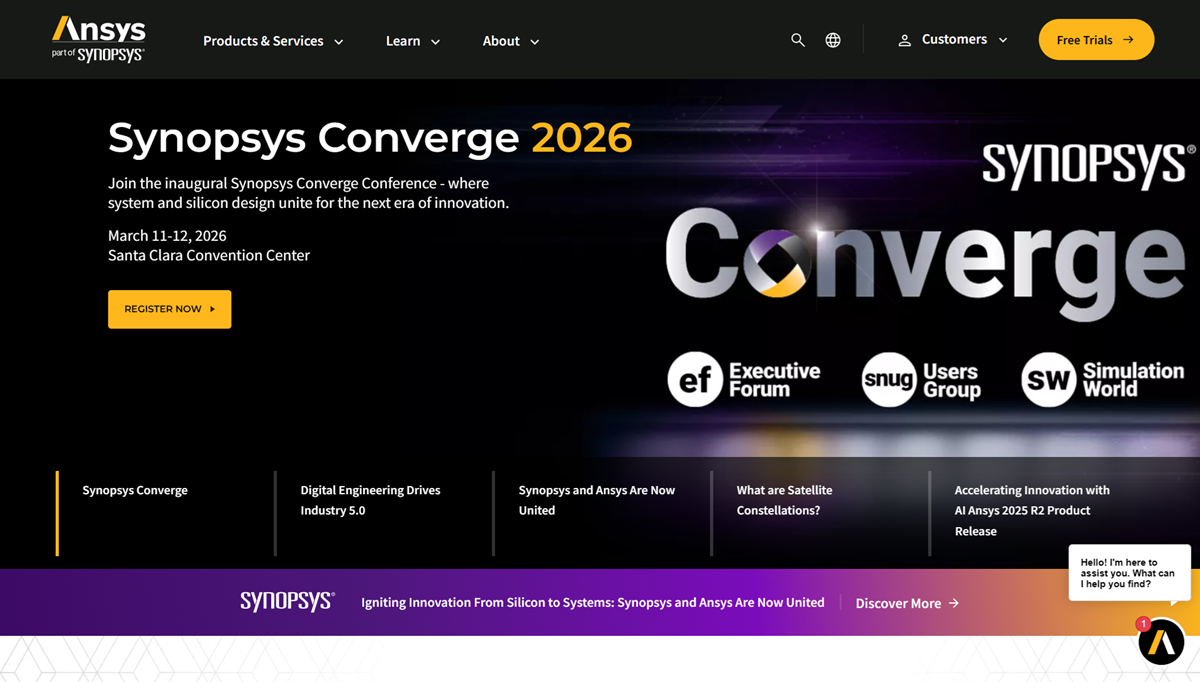
Ansys is the industry leader for simulation-driven digital twins that emphasize physics-based accuracy. It focuses on the internal behavior of assets under various conditions - thermal, structural, fluid dynamics, and electromagnetic. Ansys Twin Builder allows engineers to create simulation capabilities that run alongside operating assets to predict wear and failure with extreme precision. It is essential for safety-critical environments where machine learning alone cannot guarantee reliability. It enables predictive maintenance based on physical stress rather than just historical data patterns.
Industries best fit: Aerospace, Automotive, Energy, High-tech Manufacturing.
Best-fit scenarios
- Safety-critical engineering twins.
- Predictive engineering where simulation governs decisions.
Watch-outs: Relies heavily on specialist skills. Limited enterprise workflow tooling requires significant integration work to reach business users.
What to test:
- Real-time data coupling from sensors into simulation loops.
- Model maintenance at scale across assets and versions.
5. PTC ThingWorx
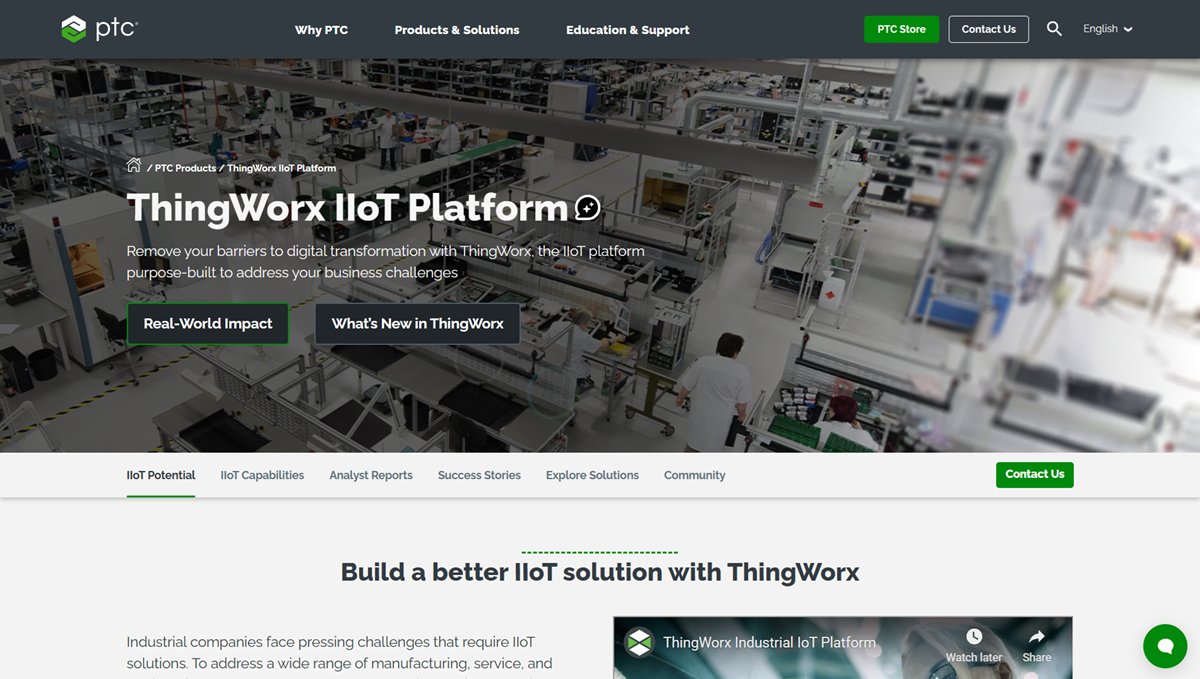
PTC ThingWorx is an IoT-centric platform focused on asset monitoring and operational insight. It excels at connecting to diverse industrial equipment to aggregate sensor data for real-time monitoring. Unlike pure simulation tools, ThingWorx is built to manage the connectivity and data orchestration required for smart cities and connected factories. It provides a rapid development environment for building dashboards and apps that visualize asset health. It uses machine learning models to detect anomalies and predict failures across fleets, making it ideal for facility managers managing distributed assets.
Industries best fit: Manufacturing, Industrial IoT, Energy, Smart Infrastructure.
Best-fit scenarios
- Asset and fleet visibility.
- Predictive maintenance programs tied to reliability outcomes.
Watch-outs: Limited system-level simulation depth without complementary modeling layers. Often needs complementary analytics for broader decision scope.
What to test:
- Scalability across fleets and sites.
- Predictive depth versus visualization outputs.
6. Palantir Foundry
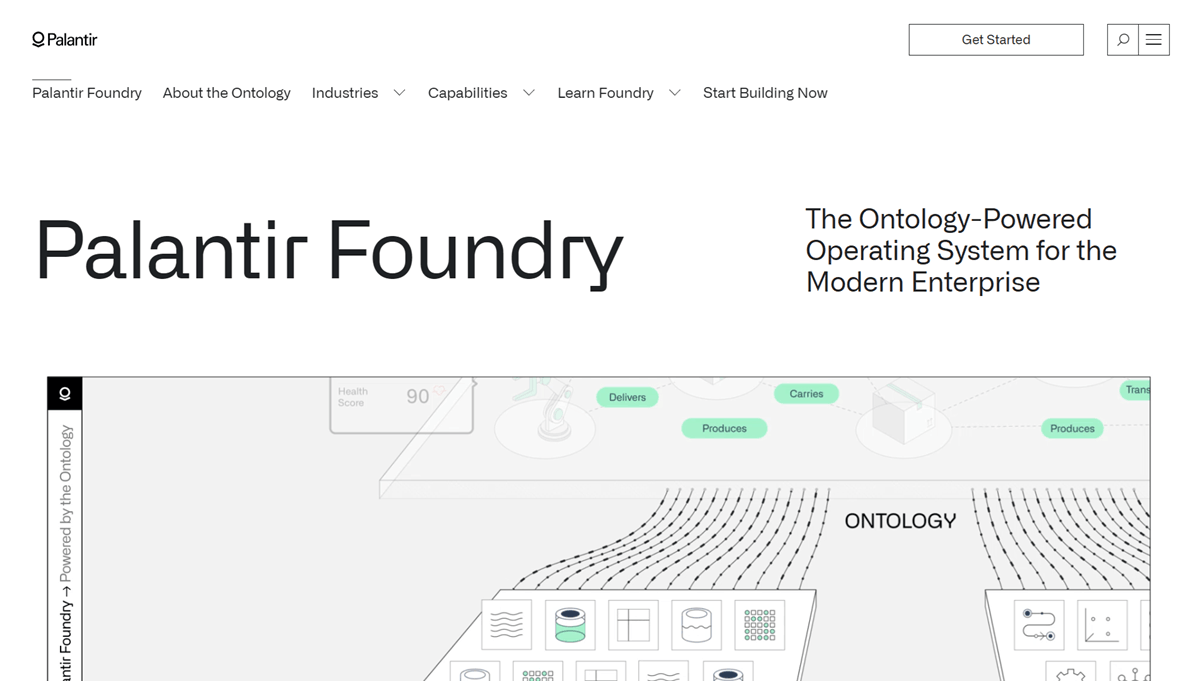
Palantir Foundry is an enterprise data operating system that supports system-level and operational twins. It connects data, processes, and decisions into a single ontology. While not a physics engine, it excels at modeling the logic and flow of complex systems—such as supply chains or transportation networks. Foundry allows teams to create a "digital twin of the organization" where users can simulate scenarios (e.g., a port strike or supplier failure) and see the ripple effects across the business. It focuses on actionable insights and closed-loop operations rather than geometric fidelity.
Industries best fit: Regulated industries, Energy, Manufacturing, Aerospace, Public Sector.
Best-fit scenarios
- Cross-system operational twins.
- Decision-centric system modeling across enterprise workflows.
Watch-outs: Platform scope and dependency are significant. Cost and implementation effort can be high.
What to test:
- Depth of simulation versus workflow orchestration.
- Time-to-value for a defined twin use case.
How to Choose the Right Digital Twin Platform
Platform selection starts with the decisions you need to improve, not the vendor label. Use the scenarios below to align your shortlist to the outcomes you need first, then validate the trade-offs you accept.
If your #1 goal is operational optimization Prioritize real-time state, reliability outcomes, and tight integration into operational workflows. Validate decision support that drives interventions, not only reporting.
If your #1 goal is simulation and scenario planning Prioritize model fidelity and explainability. Validate scenario performance under complexity and confirm the skills required for long-term maintenance.
If your #1 goal is enterprise-wide visibility Prioritize integration breadth and scalability across enterprise systems. Validate system-level reasoning across dependencies, not only asset dashboards.
Implementation Reality Check
Digital twins rarely succeed as perfect models built in isolation. They succeed when a usable twin connects to real workflows, has clear ownership, and improves a live decision in weeks, not quarters.
How digital twins actually enter the enterprise: Start with one high-impact asset or process tied to a real operational decision. Prove value before scaling across sites or fleets. Integrate with existing workflows so the twin drives decisions, not parallel reporting. Avoid "perfect model" paralysis. A usable twin with clear assumptions often beats a perfect model that never reaches operations.
Organizational design that works: Set clear ownership between domain, data, and IT. Define model data governance and validation processes so changes are reviewed and tested. Plan continuous calibration, since sensor data reliability and conditions change over time.
Time-to-value playbook: Pilot scope should focus on a single asset or process. Success metrics should include avoided downtime, efficiency gains, and decision speed. Target months, not years, for the first operational win.
Pricing, TCO and Effort
Digital twin costs rarely sit only in licensing. Most cost shows up in modelling effort, integration, calibration, and change control. Use the sections below to model total ownership before you commit.
Cost drivers: Model how licensing scales, such as assets, simulations, or data volume. Include modeling and integration effort, plus infrastructure requirements across cloud, on-prem, or hybrid environments.
Hidden TCO: Model upkeep is ongoing, not a one-off build. Sensor and data reliability work often grows beyond initial estimates. Change management and enablement decide whether the twin becomes operational practice or an isolated tool.
Final Thoughts & Next Steps
Digital twins are decision systems, not visualization tools. The right platform depends on what you need to decide, how much fidelity those decisions require, and how much organizational effort you can sustain.
Next, define two operational scenarios you care about. Pick one recurring reliability problem and one what-if intervention with clear downside risk. Use those scenarios to score each platform on decision scope, explainability, integration effort, and ownership readiness.
If your priority is system and process decisions across enterprise systems, and you need a reasoning layer that complements engineering and IoT twins, include d.AP in your shortlist. Book a demo with us to see what impact d.AP can make on your business.