
Automotive Knowledge Graph for Explainable Engineering Decisions
Complex vehicle systems generate enormous volumes of interconnected data across engineering, manufacturing, suppliers, and operations.
d.AP connects this data into a shared model of meaning so teams can make faster, explainable decisions across the vehicle lifecycle.
- Connect engineering, supplier, and operational data
- Understand dependencies across complex vehicle systems
- Enable explainable AI answers through Aluna
- Support faster, safer engineering and operational decisions
Enterprise-only demos · Real decision scenarios · No generic walkthroughs
Why Automotive Data Alone Doesn’t Deliver System Understanding
Automotive organizations operate some of the most complex engineering systems in the world.
Data exists across:
- Engineering systems
- Supplier networks
- Manufacturing environments
- Vehicle telemetry
Yet teams still struggle to answer fundamental questions about system behavior, dependencies, and risk.
Because while the data exists, the relationships between it are rarely explicit.
Vehicle systems are interconnected. Vehicle systems are interconnected.

From Fragmented Data to a Unified Automotive Knowledge Graph
Traditional automotive data platforms focus on storing or moving data.
d.AP focuses on modeling meaning.
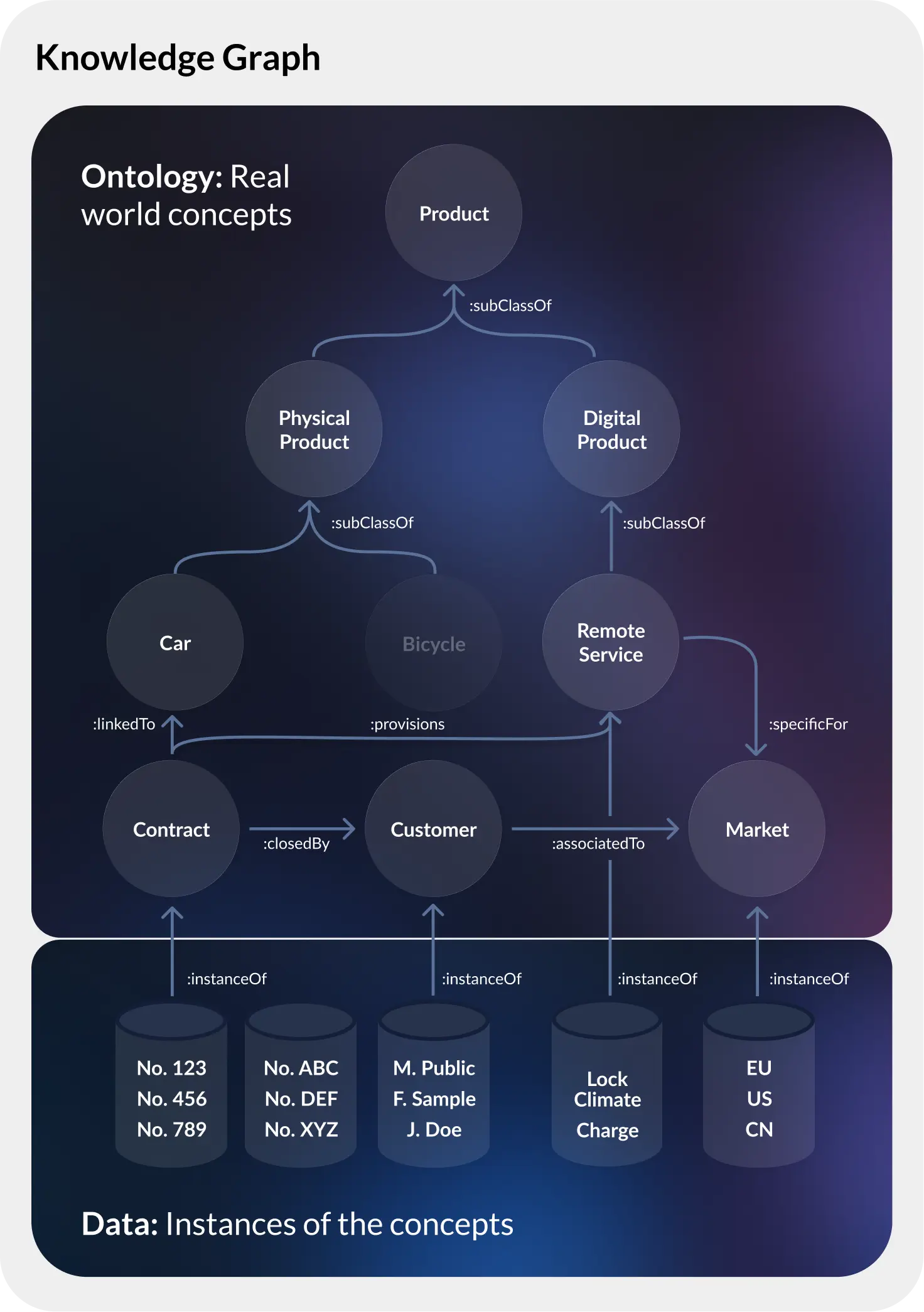
The platform builds an ontology-grounded Knowledge Graph that represents:
- Vehicle components
- Engineering relationships
- Supplier dependencies
- Operational constraints
This shared model allows teams and AI systems to reason about vehicle systems as a whole.
Traditional Automotive Data Platforms
- Data stored in silos
- Relationships inferred manually
- Analysis recreated repeatedly
Automotive Knowledge Graph with d.AP
- Explicit system relationships
- Shared engineering meaning
- Reusable reasoning across teams

Step 1: Data Integration
Engineering, supplier, and operational data sources are connected into the Knowledge Graph.

Step 2: Ontology Modeling
Vehicle systems, components, and dependencies are modeled explicitly using domain ontologies.

Step 3: Knowledge-Based Reasoning
Relationships and constraints enable reasoning across complex systems.

Step 4: Explainable AI via Aluna
Teams ask questions in plain English and receive answers grounded in engineering knowledge.
Real results, real impact.
System-Level Visibility
Understand dependencies across components, suppliers, and engineering systems.
Explainable AI for Engineering Decisions
Aluna delivers answers grounded in the automotive Knowledge Graph, ensuring explainability.
Faster Decision Cycles
Engineering teams identify risks, impacts, and dependencies without weeks of analysis.


Questions d.AP Can Help Answer
How are vehicle components connected across engineering systems?
What dependencies could impact a design change?
Which suppliers are indirectly affected by a component modification?
What downstream systems rely on this component?
Explainable AI for Automotive Decision Making
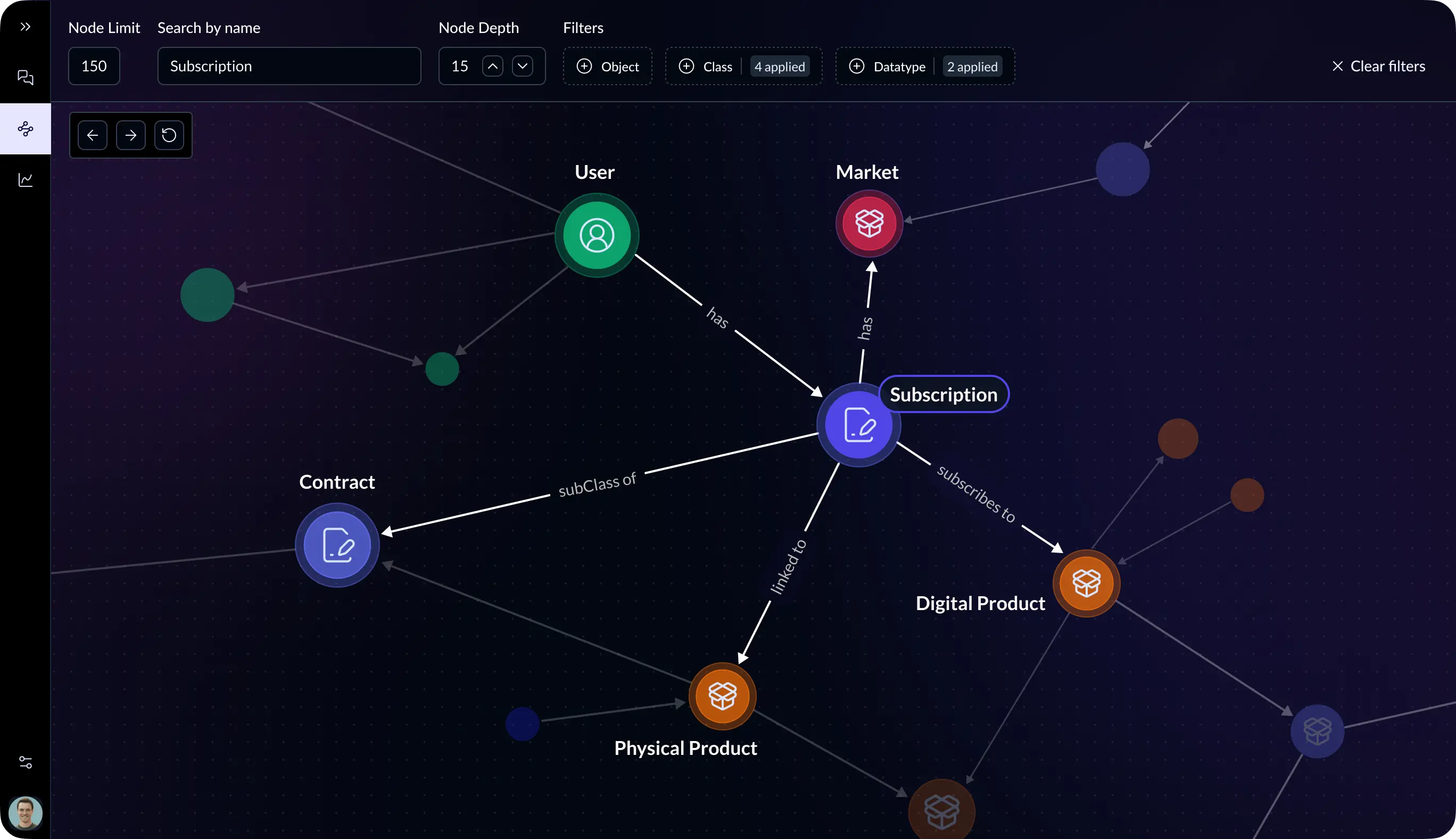
d.AP exposes the automotive Knowledge Graph through Aluna, enabling teams to ask questions in natural language and receive answers grounded in engineering knowledge.
Every answer returned through Aluna is:
- Derived from the Knowledge Graph
- Grounded in domain ontologies
- Traceable to relationships and constraints
This ensures AI can support engineering decisions without hallucination or guesswork.

Designed for Automotive Enterprise Architectures
d.AP integrates with existing engineering and data platforms.
Deployment options include:
- EU-hosted SaaS (VPC)
- Customer-managed environments
- Hybrid deployments
Adoption typically begins with a focused domain such as engineering systems or supplier networks.
Who d.AP is for
Automotive OEM engineering organizations
Digital transformation leaders
Systems engineering and architecture teams
Automotive AI and analytics initiatives
Frequently Asked Questions
We answer your questions in advance. We've missed something? Let us know.
How does d.AP integrate with existing automotive engineering systems like PLM and manufacturing platforms?
.svg)
d.AP integrates with existing engineering and operational systems without replacing them. PLM, manufacturing, supplier, and telemetry systems remain systems of record. d.AP connects their data into a Knowledge Graph that captures the relationships between components, systems, and processes.
Our engineering teams already work with complex data models. Why introduce a knowledge graph layer?
Many engineering models capture structure but not the broader relationships across systems, suppliers, and operational environments. d.AP provides a shared knowledge layer that connects these models, enabling teams to reason about system dependencies and impacts across the entire vehicle ecosystem.
How does d.AP work with automotive engineering systems like PLM?
d.AP connects data from engineering platforms such as PLM and related systems into a unified Knowledge Graph. This allows engineering relationships, dependencies, and constraints to be represented explicitly, enabling teams to reason about system impacts across components, suppliers, and lifecycle stages.
How does d.AP support AI initiatives in the automotive industry?
d.AP enables AI to operate on structured engineering knowledge rather than raw data. Through Aluna, users can ask questions in natural language and receive answers derived from the automotive Knowledge Graph, ensuring responses are grounded in real system relationships rather than probabilistic guesswork.
Can d.AP scale to the complexity of automotive engineering environments?
Yes. d.AP is designed for large-scale, multi-domain environments where systems, suppliers, and operational data are deeply interconnected. Our knowledge graph architecture allows relationships and dependencies to be modeled and reasoned across very large and complex datasets.