
Enterprise Architecture Management for Asset-Intensive Operations
An enterprise Knowledge Graph platform that connects assets, systems, and dependencies into a unified operational decision model for asset-intensive environments.
- Enterprise Knowledge Graph modeling assets, dependencies, and constraints
- Connects EAM, ERP, supply chain, and operational systems
- Enables enterprise-scale asset decision modeling
- Explainable operational decisions across operations, IT, and data
Large-scale operations only · No CMMS demos · Architecture-led walkthroughs
Why Enterprise Asset Management Breaks Down
At scale, asset failures are rarely caused by missing EAM features. They are caused by fragmentation, decision latency, and lack of system-level visibility.
Here’s what that means in practice.
- Multiple EAM systems across sites and regions
- Asset data siloed from ERP, supply chain, safety, and compliance
- Maintenance prioritization driven by local optimization
- Limited explainability for high-impact operational decisions
Decisions don’t fail because data is missing. They fail because meaning is fragmented.

EAM Systems of Record vs Enterprise Knowledge Graph Decisions
Traditional EAM platforms are systems of record. They track assets, maintenance schedules, and work orders within operational silos.
d.AP introduces an enterprise Knowledge Graph that models assets, dependencies, risks, and operational constraints across systems.
This connected model allows organizations to reason about impact, prioritization, and operational trade-offs across the entire asset ecosystem.
This is not EAM replacement. It's an enterprise knowledge graph enabling asset decisions across systems.
EAM Systems of Record
- Transaction-centric
- Asset data stored within individual systems
- Optimized for maintenance workflows
- Limited visibility across systems and dependencies
Enterprise Knowledge Graph (d.AP)
- Decision-centric
- Models assets, dependencies, risks, and constraints
- Connects EAM, ERP, supply chain, and operational systems
- Enables explainable, system-level asset decisions

Step 1: System Integration
Existing EAM, ERP, supply chain, and operational systems remain in place and are connected to the knowledge graph.

Step 2: EAM & System Integration
Existing EAM, ERP, supply chain, and operational systems remain in place.

Step 3: Graph-Based Reasoning
Decisions are derived across assets, locations, dependencies, and constraints using knowledge graph reasoning.
Step 4: Decision Consumption
Leaders and planners access explainable recommendations and system-level insights rather than isolated asset data.
What d.AP Enables for Asset Operations
Better Maintenance Prioritization
Decisions optimized across asset risk, operational constraints, cost, and impact.
Connected Asset Architecture
Assets, systems, and dependencies modeled together in a shared enterprise knowledge graph.
Explainable Operational Decisions
Every recommendation can be traced through the knowledge graph and underlying operational data.


Questions Leaders Can Answer
Which assets should we prioritize under competing constraints?
Where does a single asset failure create systemic risk?
What happens if this plant or supplier goes offline?
How do operational decisions impact cost, safety, and compliance?
Every Decision Is Explainable
Because assets, dependencies, and constraints are modeled explicitly in the knowledge graph:
- Assumptions remain transparent
- Decision logic is traceable
- Operational reasoning is audit-ready

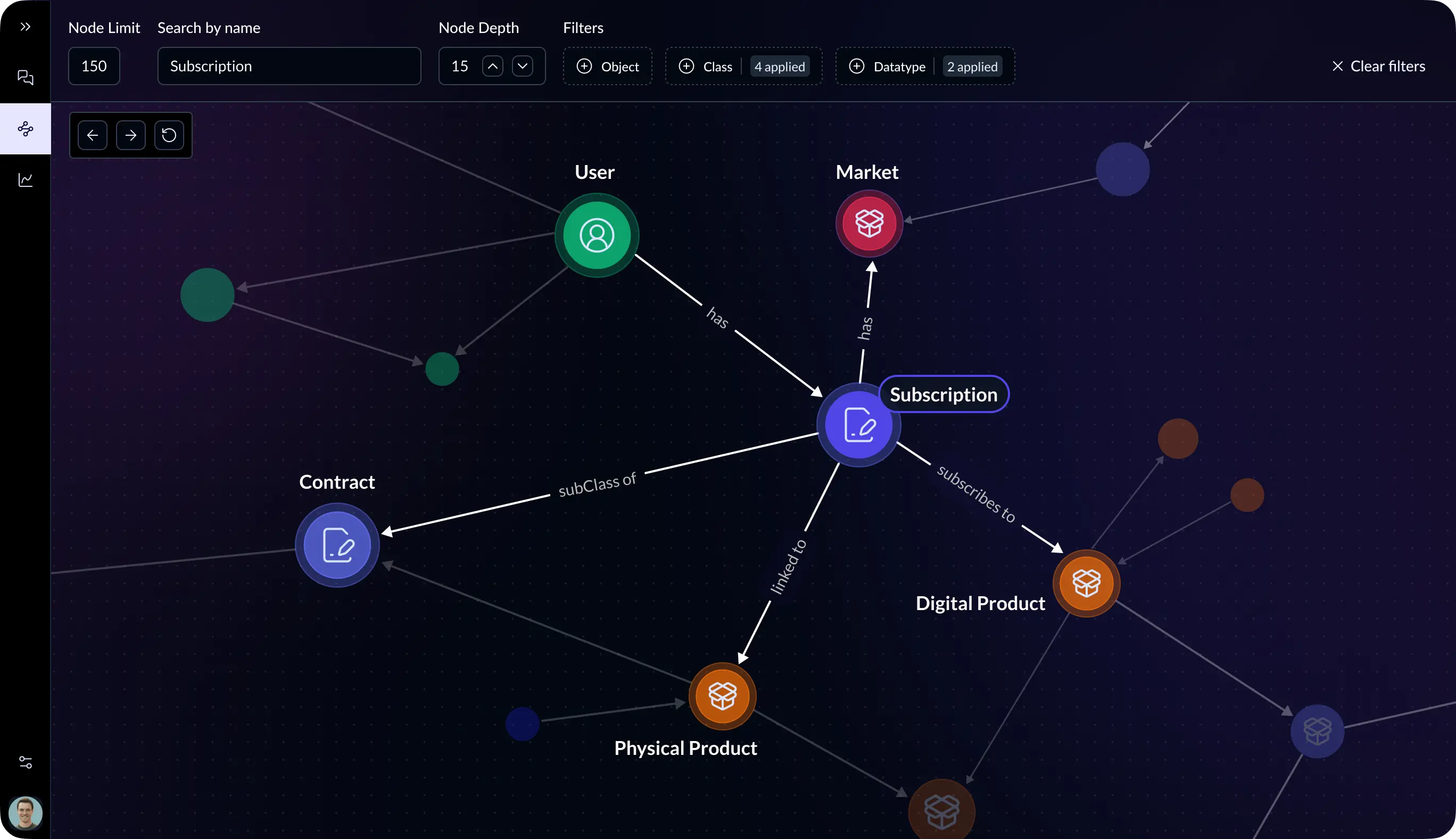
Designed for Enterprise Asset Architectures
- Enterprise Knowledge Graph architecture
- Works alongside existing EAM investments
- Deployable in SaaS or customer-managed environments
Who d.AP is for
Enterprises operating multiple EAM platforms
Large asset-intensive organizations
Operations leaders managing uptime, safety, and compliance
Enterprise architects responsible for operational decision systems
Frequently Asked Questions
We answer your questions in advance. We've missed something? Let us know.
We already have an EAM platform. Why do we need this?
.svg)
EAM platforms manage asset records and maintenance workflows. d.AP introduces an enterprise knowledge graph that connects assets, dependencies, risks, and constraints to support system-level decisions across operations.
Is d.AP an EAM replacement?
No. Existing EAM systems remain in place. d.AP complements them by adding architectural context and decision logic across assets and systems.
Our challenge is execution, not architecture. How does this help?
Execution problems at scale usually stem from poor upstream decisions. d.AP improves execution by improving decision quality before work orders are created.
How is this different from analytics or reporting on top of EAM?
Analytics explain what happened. d.AP supports decisions about what should happen next by reasoning across assets, dependencies, and constraints.
How do we justify ROI?
Through faster, better decisions, fewer cascading failures, reduced decision latency, and stronger alignment between operations and leadership.
How do business users interact with this platform?
Business and technical users interact through Aluna, which allows questions to be asked in plain English while ensuring all answers are derived from governed enterprise semantics.
Can d.AP work with multiple EAM systems across different sites or regions?
Yes. Many large organizations operate multiple EAM platforms across sites, business units, or geographies.