Knowledge Graphs & Ontologies.
The foundation without which GenAI doesn't work in the enterprise.
- July 22, 1:00 PM CEST
- Free webinar in English
- For CIOs, Chief Data/AI Officers and Enterprise Architects


Why a Knowledge Layer is
prerequisite for reliable AI.
Copilots, agents, RAG systems: the demos are convincing, but the measurable value doesn't materialize. The reason isn't the model. LLMs can't deliver reliable answers without formally modeled enterprise knowledge.
More context windows, more MCP servers and the next GPT release won't fix that. This isn't about being readable, text is already readable. It's about being interpretable: classes, relationships, constraints, and rules that a machine can logically reason from.
The established answer is Knowledge Graphs and Ontologies — 25 years of research, open standards (RDF, OWL, SPARQL, SHACL), suddenly relevant again. Google, Facebook, Siemens, Bayer and now entire other industries are building on exactly this foundation.


This webinar makes the topic concrete.
What you'll take away:
- Why LLMs hallucinate without a Knowledge Graph and why more data, more context, and more MCP servers don't solve the problem
- Knowledge Graph vs. Ontology vs. RAG vs. everything else — a clear distinction
- How an ontology is structured — classes, relationships, constraints, reasoning
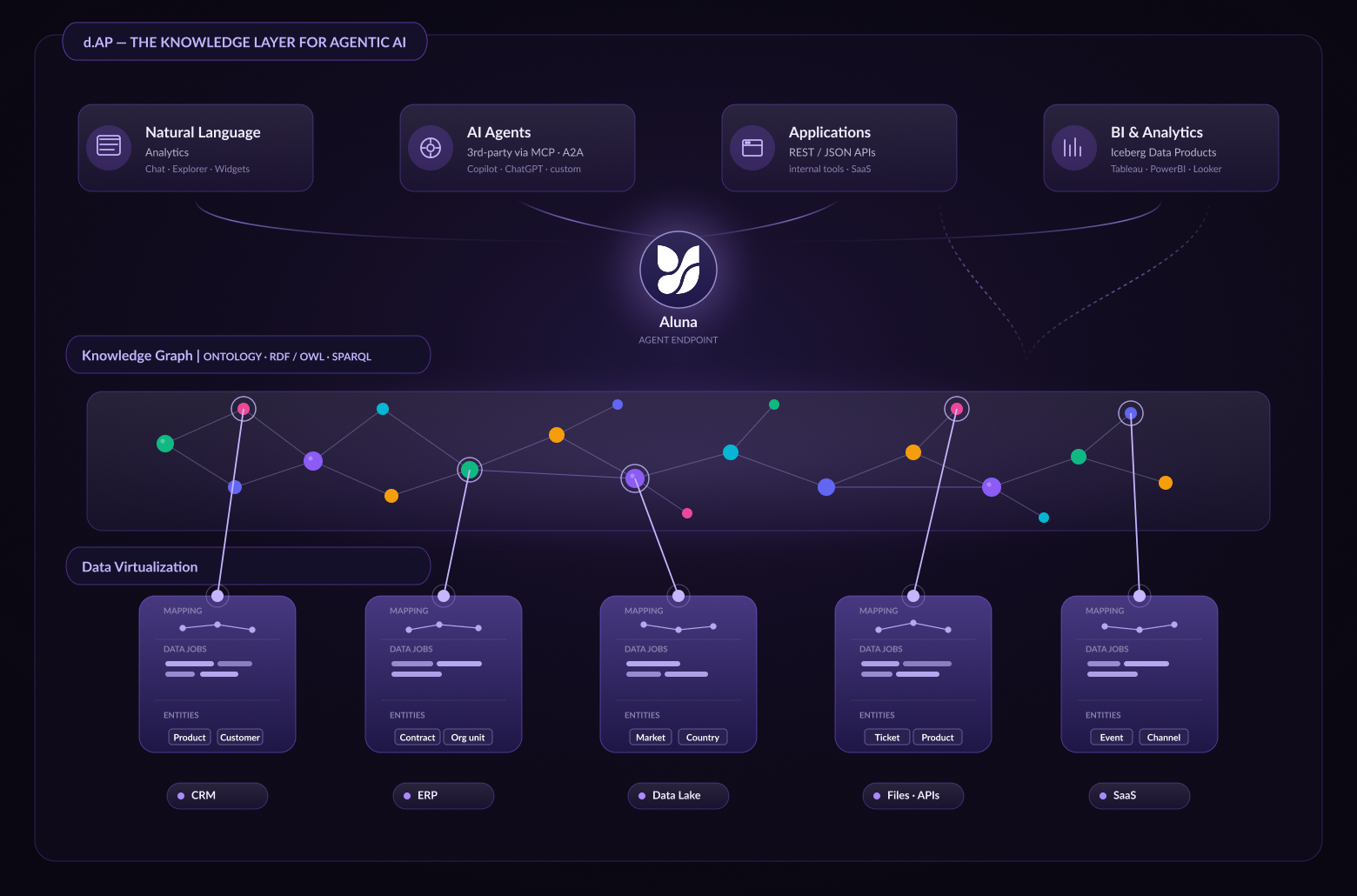
- How a Knowledge Graph works technically — DF/OWL, triple stores, SPARQL, federation; and why proprietary semantic layers become a lock-in risk
- How agents use a Knowledge Graph — integration, semantic retrieval, explainability
- How to get started step by step— without a large-scale enterprise project, with a realistic pilot scope
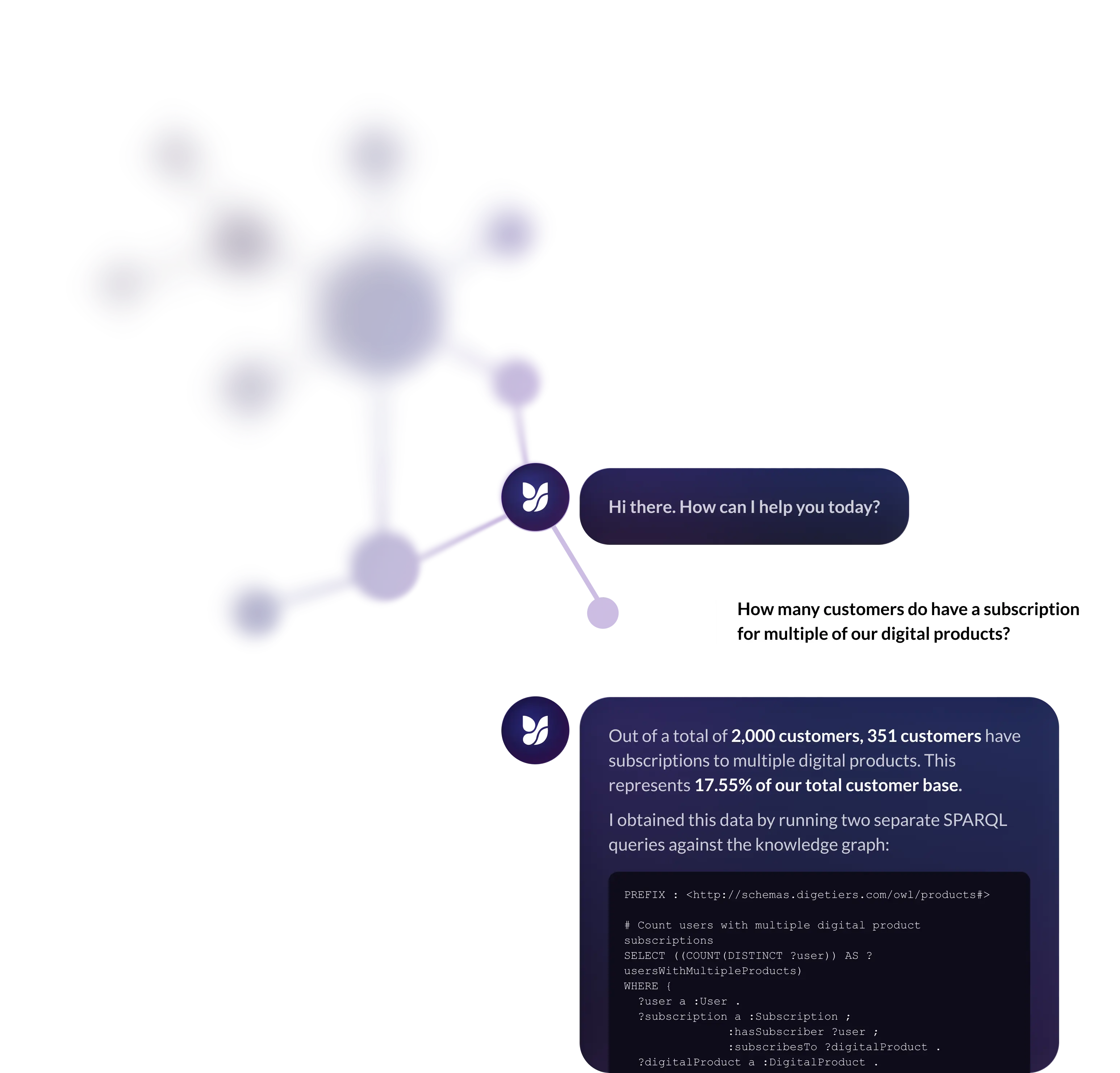
- A walkthrough of a real question — from the business question to an explainable agent answer, including an ontology excerpt and SPARQL
Who it's for and why: CIOs, Chief Data/AI Officers, Enterprise Architects, and AI leaders who need to deliver more than the next pilot over the next 12 months.


Instantly break down data silos.
Enterprises spend millions trying to integrate data across fragmented systems. d.AP solves this with a federated Knowledge Graph that serves as a scalable Semantic Layer. ERP, CRM, MES, SCM, IoT, and any other system are instantly connected without moving data. Our ontology-grounded integration makes information accessible in real time - powering analytics, AI, and operations with consistent, trusted context. No heavy ETL. No duplication. Just live, connected data.
Scale analytics, not headcount.
Analytics teams are the biggest bottleneck in most enterprises. Business users wait weeks, while companies spend millions on training programs for SQL and data skills. d.AP changes this: every employee gets their own “personal Data Analyst,” instantly answering questions without technical know-how. This multiplies analytics capacity without multiplying headcount. Reduce project costs by up to 70% and free experts to focus on innovation, not ad-hoc requests.